(205) 222-7646

Birmingham Lawn Care Calendar: What to Do Season by Season

Most lawn advice online is written for nowhere in particular. It tells you to fertilize "in early spring" without saying whether that means Minnesota or Mobile. In Central Alabama that vagueness costs you a season, because our timing is genuinely different from most of the country.
Birmingham sits in USDA hardiness zones 7b to 8a. We get hot, humid summers, a short winter with real freezes, and a spring that arrives earlier than the national averages assume. Here's what that means for your lawn, quarter by quarter.
Late Winter (February – Early March)
The single most important window of the year is the pre-emergent application, and most homeowners miss it.
Pre-emergent herbicide stops crabgrass and other summer weeds before they germinate. It does nothing once they're up. The trigger isn't a calendar date — it's soil temperature. Once soil at about two inches holds near 55°F for several consecutive days, germination begins. In the Birmingham area that typically lands in late February or early March, but a mild winter pulls it earlier.
Miss it by two weeks and you spend the rest of the summer fighting weeds you could have prevented in an afternoon.
Also in this window:
- Dormant pruning while the structure of shrubs and trees is visible
- Cutting back ornamental grasses and perennials before new growth starts
- Bed cleanup and edging ahead of the spring flush
Spring (Late March – May)
Warm-season grasses wake up. Bermuda and zoysia — the two dominant lawn grasses around Birmingham — green up as soil warms, and this is when they want feeding. Fertilizing a warm-season lawn while it's still dormant mostly feeds weeds.
This is also the right moment for:
- Mulch and pinestraw refresh before the summer heat arrives
- Irrigation start-up and testing — run every zone and actually watch it. Winter shifts heads, and a misaligned head waters your driveway for four months before anyone notices
- New landscape installation, though fall is better (more on that below)
Summer (June – August)
Growth peaks and so does stress. Weekly mowing isn't a luxury here — cutting more than a third of the blade at once shocks the plant, and a lawn allowed to run two weeks between cuts in July gets scalped when you finally do it.
Watering strategy matters more than water volume. Deep and infrequent beats light and daily: roughly an inch a week, delivered in one or two long soakings, drives roots down. Frequent shallow watering keeps roots at the surface where they cook.
Water in the early morning. Evening watering leaves grass wet overnight, which in Alabama humidity is an open invitation to fungal disease.
If you have fescue, this is when it suffers. Fescue holds color through our mild winters but struggles badly in a Birmingham July, especially in full sun on a slope. That's not a failure of care — it's the wrong grass for the exposure.
Fall (September – November)
This is the best planting window of the year, and it's the one most people skip.
Planting trees and shrubs in October or November lets roots establish through a mild winter, so the plant faces its first hot, dry stretch already anchored. Spring planting can work, but it demands far more watering to survive that first summer.
Fall is also when:
- Aeration does the most good. Central Alabama's red clay compacts hard, particularly on newer construction where equipment ran over the ground before sod went down. If your lawn looks tired despite steady feeding, compaction is the usual culprit — and fertilizer will not fix it
- Leaf and pine needle load becomes constant. Left sitting, it smothers turf
- Warm-season grasses begin going dormant. That brown is normal, not death
Winter (December – January)
The lawn is dormant, which makes this the ideal season for the work that would tear up an active lawn:
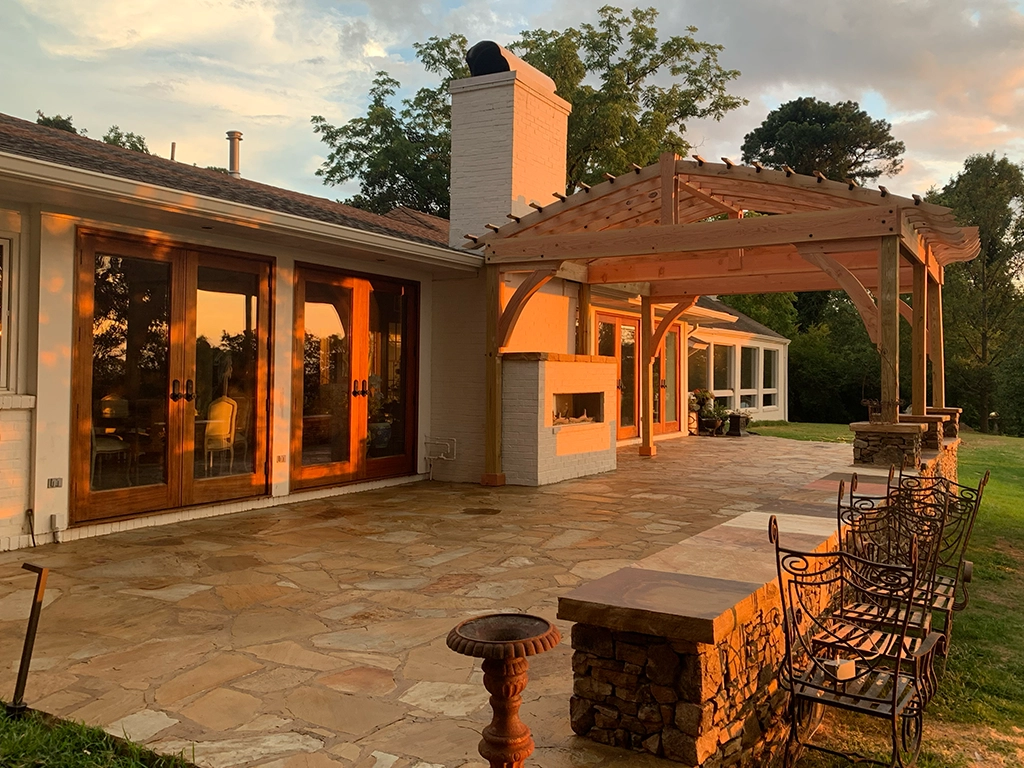
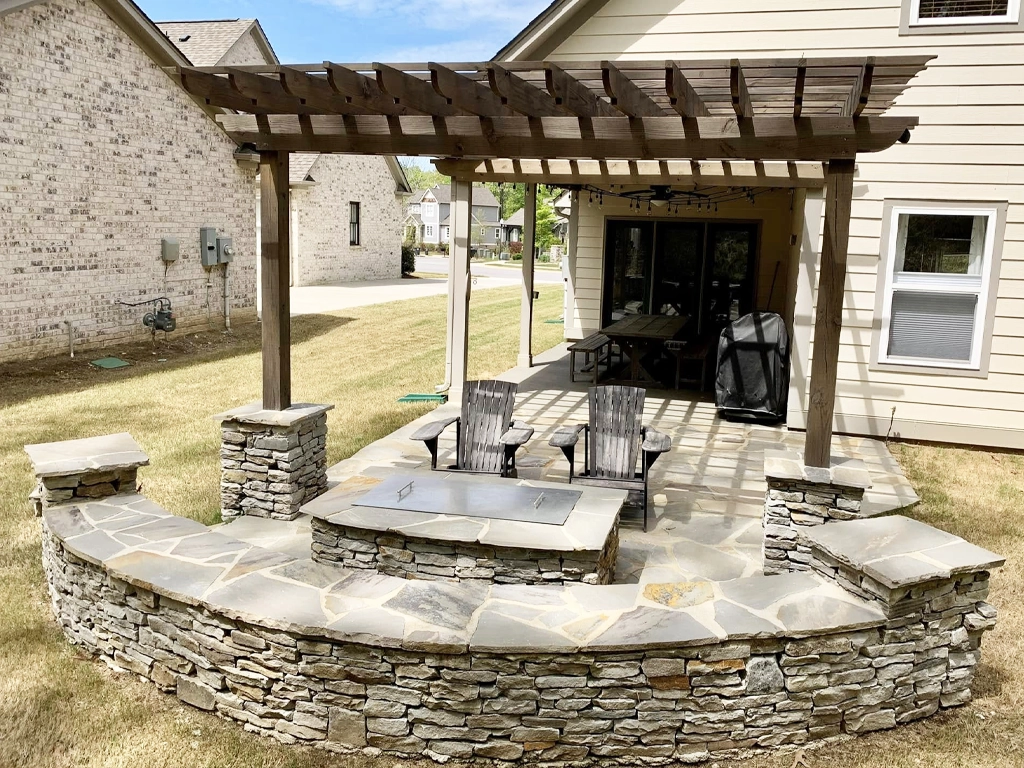
- Hardscape construction — patios, retaining walls, walkways
- Drainage correction and regrading
- Outdoor lighting installation, while beds are cut back and trenching is easy
- Specialty trimming and structural pruning
Contractors are also less booked in winter than in April, which is worth knowing if you've been putting off a bigger project.
The Pattern Underneath All of It
Nearly every recurring lawn problem we're called about in Birmingham traces back to one of three things: soil compaction, drainage, or the wrong grass for the light the yard actually gets. None of the three is solved by fertilizer, and all three are cheaper to fix correctly once than to manage badly every year.
We handle lawn maintenance on weekly and seasonal schedules across Birmingham and the surrounding communities — including Hoover, Vestavia Hills, Mountain Brook, and Homewood.
If your lawn isn't responding the way you'd expect, get in touch and we'll walk it with you.